Wednesday, October 26, 2005
Monday, October 24, 2005
A River
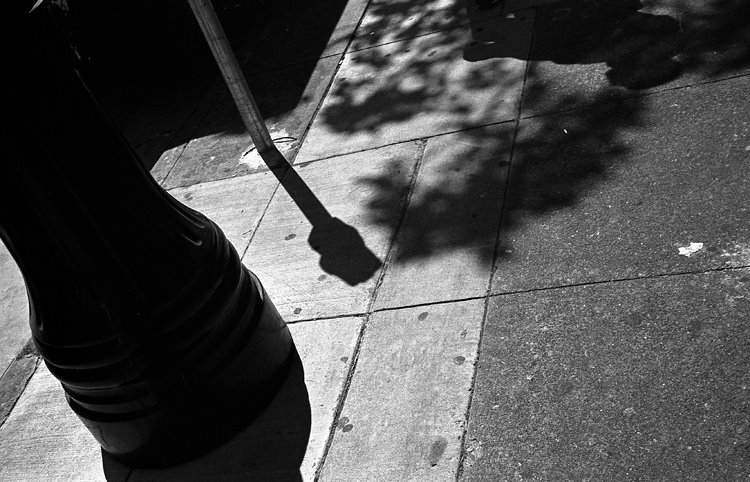
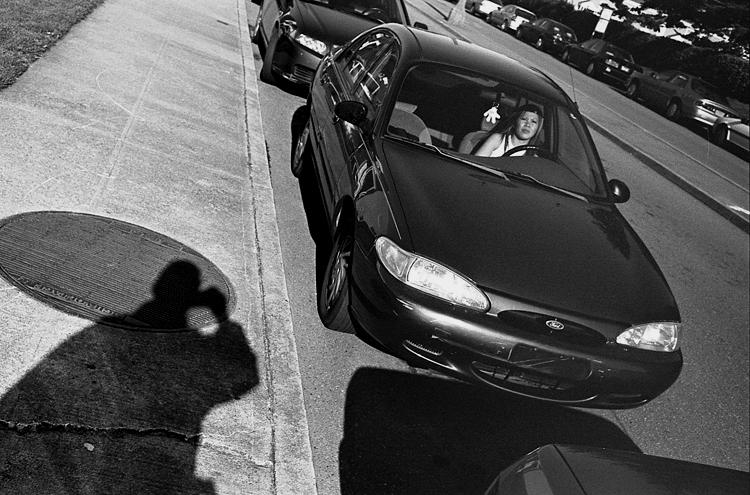
Truths float by endlessly, existing everywhere, sometimes only awaiting juxtaposition, and an instrument to catch them, to freeze them forever.
~click for a larger view~

~click for a larger view~

Thursday, October 20, 2005

Monday, October 17, 2005
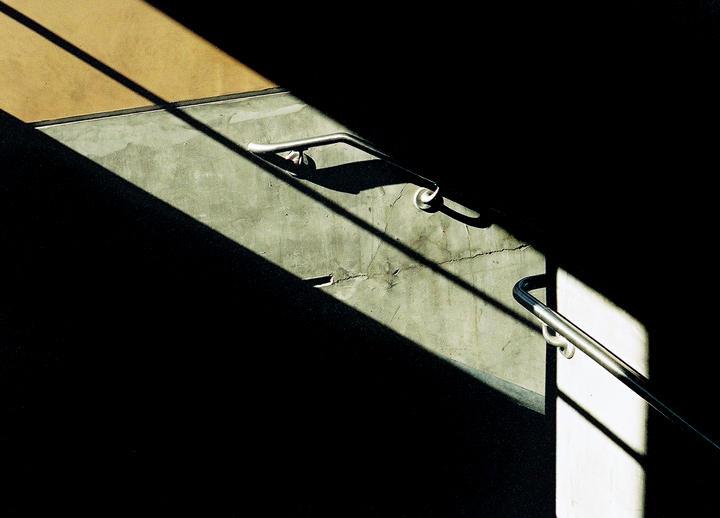
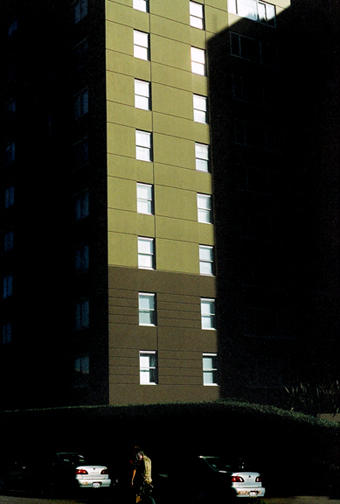
The World is a Strange and Wonderful Place. Point Your Camera and Push the Shutter
Never take pictures between the hours of 10AM & 2PM.
The world is ugly between the hours of 10AM - 2PM.
There's no beauty.
There's no truth.
Between the hours of 10AM & 2PM
the world is unphotographable.
Wait for the long shadows, the sunrise, the sunset, the fog, the bloom.
Wait for the safety of the magic hours.
The time between the hours of 10AM & 2PM is for working,
for driving, for sweat.
Nothing happens
no life happens
between the hours of 10AM & 2PM.


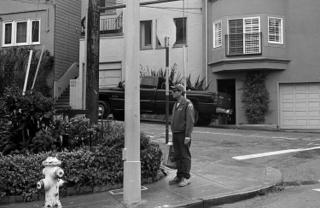
The world is ugly between the hours of 10AM - 2PM.
There's no beauty.
There's no truth.
Between the hours of 10AM & 2PM
the world is unphotographable.
Wait for the long shadows, the sunrise, the sunset, the fog, the bloom.
Wait for the safety of the magic hours.
The time between the hours of 10AM & 2PM is for working,
for driving, for sweat.
Nothing happens
no life happens
between the hours of 10AM & 2PM.

Thursday, October 13, 2005
Goodbyes, Hellos, & One Hour of Street Shooting
I sold both my Kiev 4a camera and one of my Canon GIII QL17 cameras (the good one). I had posted both of these cameras in my RFF signature and on my pbase site. In the process of saying goodbye to those cameras, I said hello to two California-based RFF members, BrianS in Irvine, and Ryan, who lives not far from me here in the SF Bay Area. I actually got a chance to meet Ryan, face-to-face. Maybe Ryan will join us for our next Bay Area meeting of RFF'ers (whenever that happens).
Anyway, I took the opportunity after meeting Ryan to finish off a couple of rolls of film that occupied my M4-P and my newly acquired Canon VL. I somehow managed to have a roll in every camera I own. I'll take a fancy to any one of my particular cameras at any given time. I'll load them up and shoot several frames, and move onto the next one. A bad habit? Naaah!
I shot with both of these cameras, on this day, using 50mm lenses, strolling about in downtown San Mateo, sneaking into alleyways and parking garages. Just when I got going, I ran out of film, completely. Ironically, I was just sort of meandering taking pictures of building patterns, getting into the flow, looking. Just after my last shot, I turned to see an image that made my pulse hop.
I was a little irritated by this, and like a gambler, feeling a change in the air, and out of cash, I darted to a couple of stores looking for some b&w film. Nada! Eventually, no longer inspired, with the sting and the itch to shoot wearing off, and my parking meter winding down, I left downtown San Mateo. I added those two rolls to the small pile growing on my desk. I now have 7 rolls of film sitting here.
We're having the kitchen remodeled and the garage space is a mess. I probably won't be able to get to processing the rolls for a couple of weeks at least. In anticipation of this situation, I purchased some Kodak Professional Ultra Color 400 film. Aaaah, color! The cameras are empty. Time to get 'em going again!
Anyway, I took the opportunity after meeting Ryan to finish off a couple of rolls of film that occupied my M4-P and my newly acquired Canon VL. I somehow managed to have a roll in every camera I own. I'll take a fancy to any one of my particular cameras at any given time. I'll load them up and shoot several frames, and move onto the next one. A bad habit? Naaah!
I shot with both of these cameras, on this day, using 50mm lenses, strolling about in downtown San Mateo, sneaking into alleyways and parking garages. Just when I got going, I ran out of film, completely. Ironically, I was just sort of meandering taking pictures of building patterns, getting into the flow, looking. Just after my last shot, I turned to see an image that made my pulse hop.
I was a little irritated by this, and like a gambler, feeling a change in the air, and out of cash, I darted to a couple of stores looking for some b&w film. Nada! Eventually, no longer inspired, with the sting and the itch to shoot wearing off, and my parking meter winding down, I left downtown San Mateo. I added those two rolls to the small pile growing on my desk. I now have 7 rolls of film sitting here.
We're having the kitchen remodeled and the garage space is a mess. I probably won't be able to get to processing the rolls for a couple of weeks at least. In anticipation of this situation, I purchased some Kodak Professional Ultra Color 400 film. Aaaah, color! The cameras are empty. Time to get 'em going again!
Tuesday, October 11, 2005
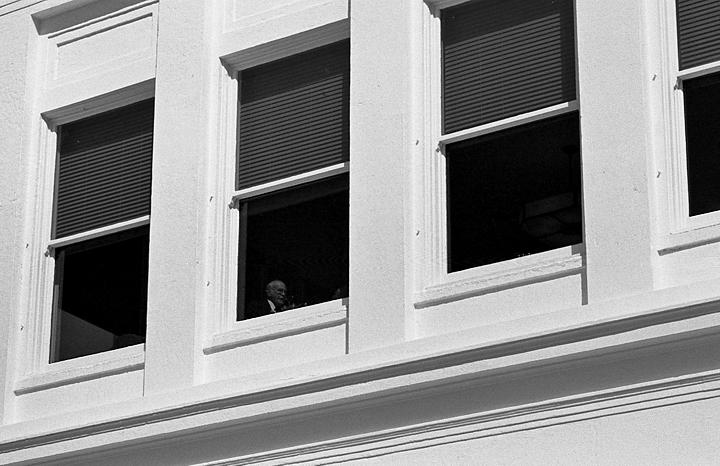

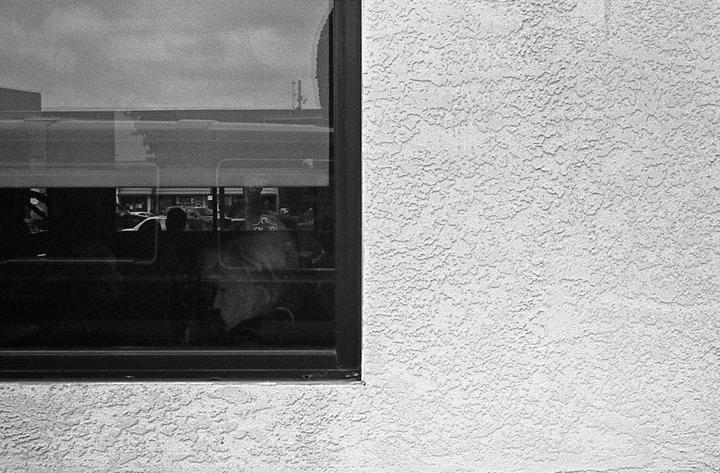
Sunday, October 09, 2005
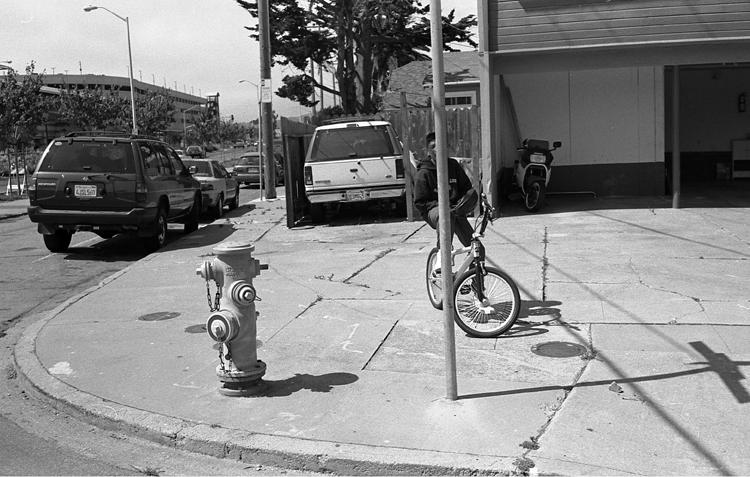
Friday, October 07, 2005
The Latent Image the Fading Memories
My folks are getting on in years. Sometimes I forget how old they are. Both are in their late 70's, but they have never truly aged to me. In recent years they've taken to going through their house, and pulling out boxes of stuff that I and my two brothers and three sisters left when we moved out years ago. A somber sign I guess that the are readying themselves, a thought I can't begin to fathom.
Late last year when I was visiting, I was explaining to them about how I had gotten back into photography. This prompted an excited reaction from my mom, who hurriedly left the room and came back with a box of photography stuff that had been tucked away in some storage cabinets in a bathroom off the garage (the very one I used to process my film many, many years ago).
The box was filled with packets of photo paper, developing reels, chemical bottles, thermometers, and exposed film. It figured. I had just gone out and purchased developing equipment off Craigslist and from a couple of dusty old photo stores with deeply discounted sales, so after smacking my forehead, I focused on the real gems of this rediscovery: the exposed unprocessed rolls of film.
I knew they were exposed, because I have always rewound film all the way back into the canister. I shot the rolls; I knew I did, even though my sister followed my photography interest and used my equipment to complete her photography projects. I could feel that they were mine. They were like little gems, cold in my hand. I knew I was the last to touch them 20 odd years ago, and the first to touch them again, 20 odd years later. There were 6 rolls of 20 exposure TriX and 5 rolls of color print film.
I didn't hold out much hope for the long suffereing latent image, imagining it wasting away, pining for the light of day, waiting for the scratch of solvent, the chemical magic, anticipating release. I couln't image what was on the rolls, however.
I processed a couple of the TriX rolls and knew immediately why I hadn't processed them earlier. The entire roll consisted of shots of television screens. Back when these rolls were exposed, in the pre-cable TV, pre-MTV days, it was kind of cool to take pictures of images projected on televisions. I shot these for a filmaking project/idea, which I later abandoned, and back around that time things like found footage, and audio clips from movies and t.v. shows were finding their way into movies and popular music (e.g. Talking Heads, and Big Audio Dynamite). Like I said it was cool.
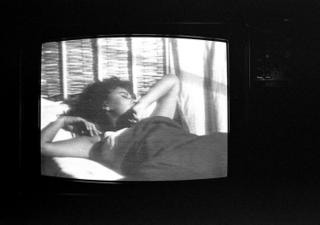

I still have a few rolls left of the TriX, but I now turned my attention to the color film, the 4 C-41 process rolls. I knew these were considerably more vulnerable to the crawl of time. I held very little hope here, and dreaded dropping them off at my local Long's Drug store fearing not only that I'd garner the suspicious looks of the one hour lab personnel, but also that I'd end up paying for faded shots of some Sophia Loren movie on an old TV screen.
I finally mustered the courage and dropped one of them off for processing. I was surprised how well they the film fared. The color had shifted, the negatives had suffered. The negative strip was the color of cold coffee with not enough cream, or 1% milk.
The shots were of a family Christmas dinner party. There was my mom and dad, younger. My dad was still working at that time, and he was on crutches, the result of an accident incurred while working as an electrician on the waterfront in Oakland. My cousin was there, as were two of my three sisters, one looking very eighties-ish with her spiky hair and drastic makeup, and the other young and plump in a frumpy little dress. These shots were legible, but with crazy color shifts and a muted dim light.
The clearest shot was of my dad and my uncle. Within maybe two or three years of this photograph, my uncle would be dead from cancer. His eyes in the photograph were bright and his face was happy and full of Christmas cheer. My dad there with him, the big brother, smiled easily—easier than I have ever seen him. They both looked at me then, twenty-odd years ago, and now twenty-odd years later. Happy to no longer be the unknown latent image, precariously near extinction. Happy to see the light of day.
Late last year when I was visiting, I was explaining to them about how I had gotten back into photography. This prompted an excited reaction from my mom, who hurriedly left the room and came back with a box of photography stuff that had been tucked away in some storage cabinets in a bathroom off the garage (the very one I used to process my film many, many years ago).
The box was filled with packets of photo paper, developing reels, chemical bottles, thermometers, and exposed film. It figured. I had just gone out and purchased developing equipment off Craigslist and from a couple of dusty old photo stores with deeply discounted sales, so after smacking my forehead, I focused on the real gems of this rediscovery: the exposed unprocessed rolls of film.
I knew they were exposed, because I have always rewound film all the way back into the canister. I shot the rolls; I knew I did, even though my sister followed my photography interest and used my equipment to complete her photography projects. I could feel that they were mine. They were like little gems, cold in my hand. I knew I was the last to touch them 20 odd years ago, and the first to touch them again, 20 odd years later. There were 6 rolls of 20 exposure TriX and 5 rolls of color print film.
I didn't hold out much hope for the long suffereing latent image, imagining it wasting away, pining for the light of day, waiting for the scratch of solvent, the chemical magic, anticipating release. I couln't image what was on the rolls, however.
I processed a couple of the TriX rolls and knew immediately why I hadn't processed them earlier. The entire roll consisted of shots of television screens. Back when these rolls were exposed, in the pre-cable TV, pre-MTV days, it was kind of cool to take pictures of images projected on televisions. I shot these for a filmaking project/idea, which I later abandoned, and back around that time things like found footage, and audio clips from movies and t.v. shows were finding their way into movies and popular music (e.g. Talking Heads, and Big Audio Dynamite). Like I said it was cool.

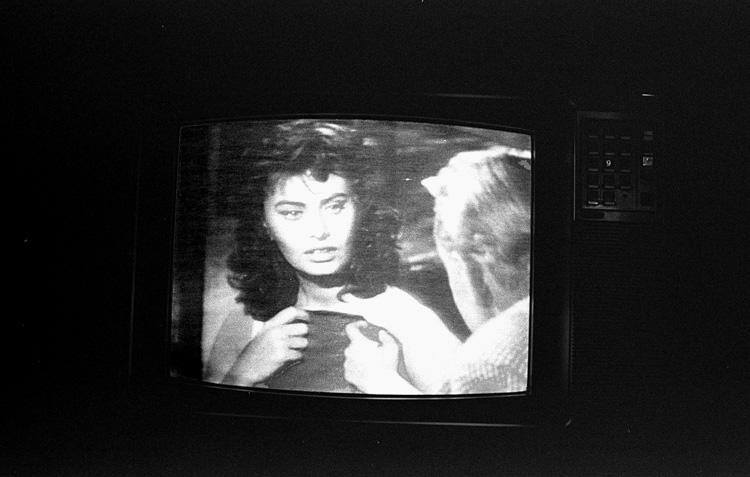
I still have a few rolls left of the TriX, but I now turned my attention to the color film, the 4 C-41 process rolls. I knew these were considerably more vulnerable to the crawl of time. I held very little hope here, and dreaded dropping them off at my local Long's Drug store fearing not only that I'd garner the suspicious looks of the one hour lab personnel, but also that I'd end up paying for faded shots of some Sophia Loren movie on an old TV screen.
I finally mustered the courage and dropped one of them off for processing. I was surprised how well they the film fared. The color had shifted, the negatives had suffered. The negative strip was the color of cold coffee with not enough cream, or 1% milk.
The shots were of a family Christmas dinner party. There was my mom and dad, younger. My dad was still working at that time, and he was on crutches, the result of an accident incurred while working as an electrician on the waterfront in Oakland. My cousin was there, as were two of my three sisters, one looking very eighties-ish with her spiky hair and drastic makeup, and the other young and plump in a frumpy little dress. These shots were legible, but with crazy color shifts and a muted dim light.
The clearest shot was of my dad and my uncle. Within maybe two or three years of this photograph, my uncle would be dead from cancer. His eyes in the photograph were bright and his face was happy and full of Christmas cheer. My dad there with him, the big brother, smiled easily—easier than I have ever seen him. They both looked at me then, twenty-odd years ago, and now twenty-odd years later. Happy to no longer be the unknown latent image, precariously near extinction. Happy to see the light of day.

Tuesday, October 04, 2005
Canon VL Photos
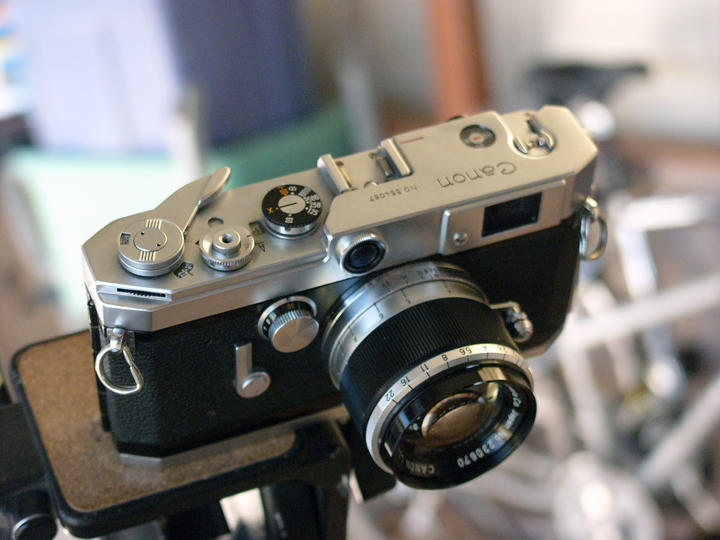
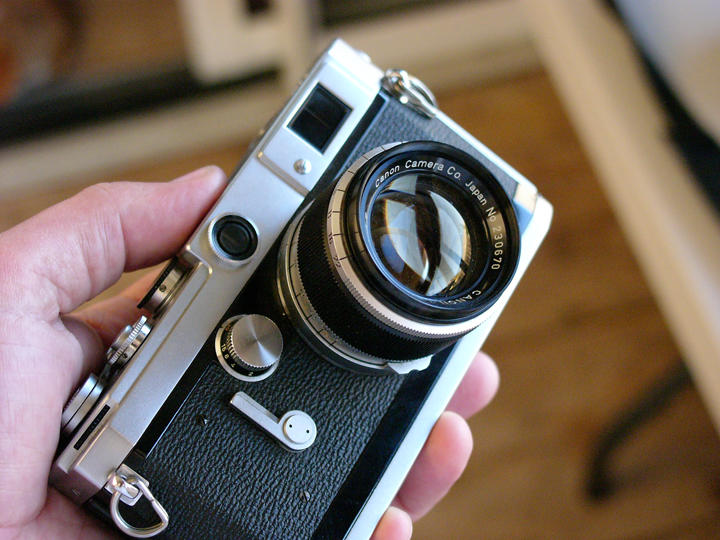
Here are the photos. See the previous post for details.
~Click on a photo to see it bigger~



~Click on a photo to see it bigger~


Stepping Back
I rushed into rangefinder (rf) photography, buying a Leica (which I lusted after for a long time), and then "slumming" around a bit. I tried an FSU (former Soviet Union) camera, and a few fixed lens rf's. I found I liked M mount camera's, with or without meters (preferably with). I even went back and shot a little with a TLR. I'm hopelessly hooked on Leicas and my Minolta CLE. I've spent quite a bit of money on my "hobby," and now I'm looking to sell off those 'flights of fancy,' so if you get a chance visit my Pbase gallery and check out the gallery of cameras I have for sale.
http://www.pbase.com/harpman
All that said, I shot with a Canon VL over last weekend, to try it out. It's an interesting camera, a screw mount with some interesting features. It had a 50/1.8 lens on it. I ran it through as much variety of exposures as I could. I've yet to process the film, but I was really shooting with it to see how it handled. I've seen enough of the 50/1.8 over on RFF to get an idea on how it's going to look, and I actually own a chrome Serenar 50/18. What I needed to do was use the camera, and see how it compared to shooting with a Leica.
So many comparisons are made between Leicas and other cameras, particularly the Canon P and the V series, that I just had to see for myself. Most of those comparisons, usually end up with the non-Leica user blowing off the Leica and stating that their P or V series is just as good (if not better). I've yet to handle a P, but I have now handled a VT and a VL—shooting only with the VL.
My initial impression was that the VL is OK. It's heavy and feels well made. It didn't give me that feeling, the one I get when I handle my Leica, my CLE, or even my Bessa R2. In fairness, one outing isn't enough—even though it was for the above mentioned cameras.
I'll post pictures here when I get them processed. I shot some digital images of the camera, so look for those in the next few posts. I'll try to get the VL again to shoot some more with it. I used it under the pretense of potentially buying it. I just may do that. This could truly be my last fling into non-Leica, non-M mount cameras. I will probably never get the lust for glass out of my system, though. But that's for another time.
Cheers All!
http://www.pbase.com/harpman
All that said, I shot with a Canon VL over last weekend, to try it out. It's an interesting camera, a screw mount with some interesting features. It had a 50/1.8 lens on it. I ran it through as much variety of exposures as I could. I've yet to process the film, but I was really shooting with it to see how it handled. I've seen enough of the 50/1.8 over on RFF to get an idea on how it's going to look, and I actually own a chrome Serenar 50/18. What I needed to do was use the camera, and see how it compared to shooting with a Leica.
So many comparisons are made between Leicas and other cameras, particularly the Canon P and the V series, that I just had to see for myself. Most of those comparisons, usually end up with the non-Leica user blowing off the Leica and stating that their P or V series is just as good (if not better). I've yet to handle a P, but I have now handled a VT and a VL—shooting only with the VL.
My initial impression was that the VL is OK. It's heavy and feels well made. It didn't give me that feeling, the one I get when I handle my Leica, my CLE, or even my Bessa R2. In fairness, one outing isn't enough—even though it was for the above mentioned cameras.
I'll post pictures here when I get them processed. I shot some digital images of the camera, so look for those in the next few posts. I'll try to get the VL again to shoot some more with it. I used it under the pretense of potentially buying it. I just may do that. This could truly be my last fling into non-Leica, non-M mount cameras. I will probably never get the lust for glass out of my system, though. But that's for another time.
Cheers All!
Wednesday, September 28, 2005
White-Haired Woman
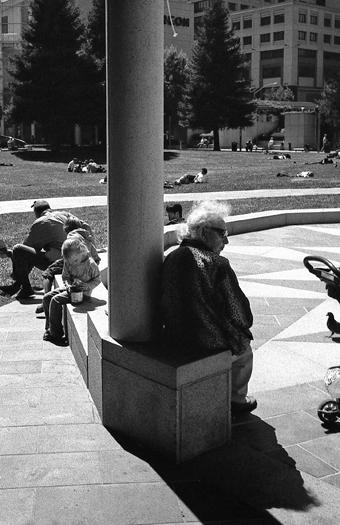
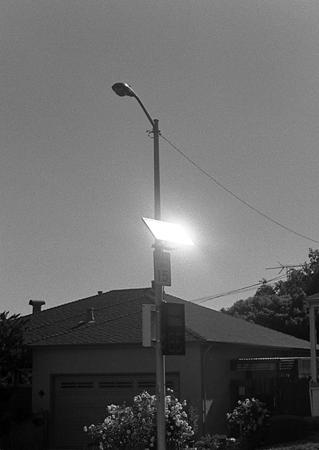
The wind blew her white hair wildly, and with the late afternoon sun, bright and low in the sky, her hair was like a white-hot flame on her head. I drew close to snap a few frames. In the end, I felt the result was unsatisfactory. I can only equate my disapppointment to that which I've felt when trying to capture specular highlights on (black & white) film.
Friday, September 23, 2005
Friday, September 02, 2005
Rate My Photograph—Fear and Loathing on RFF
The members of RFF (see previous post) had an interesting discussion this week that centered on the the online forum's gallery. Things got a little heated, but amazingly remained entirely under control. This is a credit to the membership over there, who really seem to care enough to try to make RFF different from so many other online forums. The discussion was about the quality of the images showing up and taking up space in the gallery (ownership initiated a 5 image/day upload limit because decreasing disk space and server load). The argument being proffered suggested that the membership, particularly the newer members, were not uploading their best images, and were instead sapping system resources with massive uploads of unpresentable vacation-type images.
Obviously, a discussion like this can head off into several different directions, including, in this case, a discussion on image critiquing. I'm not sure if it was coincidental or not, but just after this discussion started, the ownership of RFF initiated a numerical rating system in the gallery, which of course immediately set another two or three threads off and running. The discussion raged for a while, with some people embracing the ratings idea, others stating they didn't want their images rated on a numerical basis, others announcing that they only wanted written commentaries, and others wanting the numerical system only if it was accompanied by written commentary. And yes, some did not want any change at all. This latter group insisted that if they indeed wanted a critique they would ask for it. This last comment spun off a seperate idea that resulted in a special folder being set up specifically for image critiquing, called Rate My Photograph.
Of course, this then required a call for some critiquing guidelines, which generated suggestions such as: only those that post pictures can comment on images in the Rate My Photograph (RMP) folder, and a possible scale adjustment (from 1 to 10, to something shorter), and other ideas that the membership began bouncing around. This seemed a constructive discussion that ownership should have encouraged. Instead the discussion just sort of vaporized under uninspired moderating.
The RMP folder and numerical gallery ratings lasted for approximately 24 hours, before ownership turned off the rating function. A poll, which asked the question, "Allow ratings of pictures in gallery?," and allowed a simple yes or no choice, indicated that 55% of the voting membership disapproved of the numerical system, while 45% approved.
I voted against the rating system, based on the idea that the forum wasn't ready for it on two fronts: not enough moderators, and a member base that is inexperienced/unskilled in the critique process. RFF has come quite a ways (successfully, I add) with basically two moderators, but numerical image rating on other sites traditionally has proven to be the source of much friction and fighting. Most of the RFF membership seemed all too familiar with this and voiced concern about RFF becoming like those other places, where the bad feelings surrounding rating practices of its membership spilled into other parts of the site. I guess the thought, the fear, the loathing, of having to deal with this eventuality paralyzed ownership and moderator, whose only retort was, "if it ain't broke, don't fix it."
Who could fault this approach. RFF is a wonderfully toned place to hang out, and IMO, to keep from having the rating system destroy RFF, the ownership would need to recruit additional moderators, and especially one whose sole responsibility would be gallery moderation, and management of the RMP folder. RFF is an international site with a couple thousand members. A single owner and a single moderator really couldn't pull this off alone. Additionally, a group of knowledgeable individuals would need to come together, work together and create a set of critique guidelines and rules that would apply to the RMP folder.
The lack of experience and skill in the critque process is evident at RFF, and a numerical rating system alone doesn't do much educate membership. I think a critiquing method that involves both a numerical rating and constructive criticism, could actually work, but not with a membership base that doesn't know how a critique works. Currently, comments given out by RFF membership is rarely constructive, and is more along the lines of either a cheery "atta-boy" or a cold silence. If you've ever been in a beginning photography class, or art class, where critiques are integral and necessary, you'll instantly recognize this pattern of praise or silence. Often the silence isn't necessarily a condemnation of an image, but a timidity, or a lack of the vocabulary, or a lack of understanding regarding the process (inexperienced and unskilled). Sometimes it is a fear of recrimmination, and most often the fear of receiving any sort of criticism in return, constructive or otherwise.
The skill goes both ways however, the critque-er has a responsibility to "speak" the correct language, and that too takes practice and experience. But the good thing here is that all of this can be very easily learned through experience, and I think that can happen in an online environment. It just requires some foresight, planning, and some willing and able individuals to work it out. So while I voted against the rating system for these reasons, I feel that RFF is missing a really great opportunity to augment what is already an excellent site. The RMP folder, with numerical ratings was actually generating some interest and things were getting to be fun again at the RFF gallery. I was back to visiting the gallery first, prior to forums. However, it was very evident that everyone that either posted an image, or supplied a commentary was going about it in their own way. So while I'll miss participating in the RMP folder, it is good that the numerical rating function was turned off.
So yes, in a sense, I am delivering some constructive criticism to my favorite site, and I hope those members who read this (if anyone ever does), will consider what I'm saying. The poll results are not a mandate, and if anything a properly worded poll would most likely clarify that membership doesn't really mind a numerical rating, but does fear losing the dynamics of a great site. The common mantra at RFF has been, "if it ain't broke, don't fix it." How about this instead, "if it ain't broke, don't fix it, but keep in mind it might need a tune-up, because 'ain't broke' doesn't mean not working optimally." I know it's long and will never fit on a bumper sticker, but it should make the point. Good things can get better. If any site can pull this off, it is RFF.
Obviously, a discussion like this can head off into several different directions, including, in this case, a discussion on image critiquing. I'm not sure if it was coincidental or not, but just after this discussion started, the ownership of RFF initiated a numerical rating system in the gallery, which of course immediately set another two or three threads off and running. The discussion raged for a while, with some people embracing the ratings idea, others stating they didn't want their images rated on a numerical basis, others announcing that they only wanted written commentaries, and others wanting the numerical system only if it was accompanied by written commentary. And yes, some did not want any change at all. This latter group insisted that if they indeed wanted a critique they would ask for it. This last comment spun off a seperate idea that resulted in a special folder being set up specifically for image critiquing, called Rate My Photograph.
Of course, this then required a call for some critiquing guidelines, which generated suggestions such as: only those that post pictures can comment on images in the Rate My Photograph (RMP) folder, and a possible scale adjustment (from 1 to 10, to something shorter), and other ideas that the membership began bouncing around. This seemed a constructive discussion that ownership should have encouraged. Instead the discussion just sort of vaporized under uninspired moderating.
The RMP folder and numerical gallery ratings lasted for approximately 24 hours, before ownership turned off the rating function. A poll, which asked the question, "Allow ratings of pictures in gallery?," and allowed a simple yes or no choice, indicated that 55% of the voting membership disapproved of the numerical system, while 45% approved.
I voted against the rating system, based on the idea that the forum wasn't ready for it on two fronts: not enough moderators, and a member base that is inexperienced/unskilled in the critique process. RFF has come quite a ways (successfully, I add) with basically two moderators, but numerical image rating on other sites traditionally has proven to be the source of much friction and fighting. Most of the RFF membership seemed all too familiar with this and voiced concern about RFF becoming like those other places, where the bad feelings surrounding rating practices of its membership spilled into other parts of the site. I guess the thought, the fear, the loathing, of having to deal with this eventuality paralyzed ownership and moderator, whose only retort was, "if it ain't broke, don't fix it."
Who could fault this approach. RFF is a wonderfully toned place to hang out, and IMO, to keep from having the rating system destroy RFF, the ownership would need to recruit additional moderators, and especially one whose sole responsibility would be gallery moderation, and management of the RMP folder. RFF is an international site with a couple thousand members. A single owner and a single moderator really couldn't pull this off alone. Additionally, a group of knowledgeable individuals would need to come together, work together and create a set of critique guidelines and rules that would apply to the RMP folder.
The lack of experience and skill in the critque process is evident at RFF, and a numerical rating system alone doesn't do much educate membership. I think a critiquing method that involves both a numerical rating and constructive criticism, could actually work, but not with a membership base that doesn't know how a critique works. Currently, comments given out by RFF membership is rarely constructive, and is more along the lines of either a cheery "atta-boy" or a cold silence. If you've ever been in a beginning photography class, or art class, where critiques are integral and necessary, you'll instantly recognize this pattern of praise or silence. Often the silence isn't necessarily a condemnation of an image, but a timidity, or a lack of the vocabulary, or a lack of understanding regarding the process (inexperienced and unskilled). Sometimes it is a fear of recrimmination, and most often the fear of receiving any sort of criticism in return, constructive or otherwise.
The skill goes both ways however, the critque-er has a responsibility to "speak" the correct language, and that too takes practice and experience. But the good thing here is that all of this can be very easily learned through experience, and I think that can happen in an online environment. It just requires some foresight, planning, and some willing and able individuals to work it out. So while I voted against the rating system for these reasons, I feel that RFF is missing a really great opportunity to augment what is already an excellent site. The RMP folder, with numerical ratings was actually generating some interest and things were getting to be fun again at the RFF gallery. I was back to visiting the gallery first, prior to forums. However, it was very evident that everyone that either posted an image, or supplied a commentary was going about it in their own way. So while I'll miss participating in the RMP folder, it is good that the numerical rating function was turned off.
So yes, in a sense, I am delivering some constructive criticism to my favorite site, and I hope those members who read this (if anyone ever does), will consider what I'm saying. The poll results are not a mandate, and if anything a properly worded poll would most likely clarify that membership doesn't really mind a numerical rating, but does fear losing the dynamics of a great site. The common mantra at RFF has been, "if it ain't broke, don't fix it." How about this instead, "if it ain't broke, don't fix it, but keep in mind it might need a tune-up, because 'ain't broke' doesn't mean not working optimally." I know it's long and will never fit on a bumper sticker, but it should make the point. Good things can get better. If any site can pull this off, it is RFF.
Saturday, August 06, 2005
Rangefinder Cameras
The other night I met with some die-hard film camera buffs, members of an internationnal online forum, called Rangefinderforum.com (RFF). We met in a bar & grill. It didn't take long before we formed an offline/real world bond, an extension of the same one we have online, centering on our passion for rangefinder cameras. We laid some of our personal camera collection out on the table, and talked for a couple of hours about lens quality, camera handling, personal perferences for gear, and our personal RF wish list.
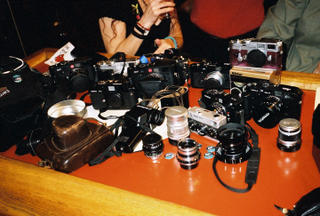
For instance, I got a chance to handle a Canon 50/1.4 lens, a gorgeous example, and a lens I've always be curious to own. The owner of this lens, Rich, expressed that the lens was his personal favorite (and this guy had some nice lenses!). I've always wanted to try one out, so I ended up buying 50/1.8 this week from a RFF member. It's not the same thing, but I'm eagerly awaiting its arrival.

Rangefinder cameras are unique, and some assume that an appreciation of them is an acquired taste. That's probably true; they certainly aren't for everyone. If you've never shot with a rf camera, you should. Beware, they are addicting, so you may seldom return to using your slr, or your digital camera.
Interest Piqued? Read below for a little more...
While some would recommend starting out with one of the many cheap (price-wise only) fixed lens cameras, such as, a Canon QL, or a Yashica GSN, IMO, to really appreciate a rf camera, you need to be able to change the lens. If you are strictly an SLR shooter you will flabbergasted at both the size of an rf lens, and the quality of the images. I have a Cosina Voigtlander 28/f3.5 lens, is about the diameter of an Oreo cookie and as long as about 3 or 4 Oreo cookies stacked atop one another. The construction of this lens is incredible, and the weight of this little bugger speaks directly to its quality build. It is a very sharp lens. When combined with my Minolta CLE, this deft little package is an unbelievable street-shooting kit.
As a first camera to try out, I suggest the Voigtlander Bessa R, combined with any one of the many CV lenses. This is a good low-cost package, with a good resale value (should you decide rf cameras aren't for you). If you can get one used, even better. For new cameras check CameraQuest.com. They have some great R packages/prices. To learn more about rf cameras try CameraQuest, Photoethnography.com, and of course my beloved Rangefinderforum.com. You can also feel free to leave me a comment/question. I'll be glad to help out where I can, or at the very least, point you to someone/some place that can.

For instance, I got a chance to handle a Canon 50/1.4 lens, a gorgeous example, and a lens I've always be curious to own. The owner of this lens, Rich, expressed that the lens was his personal favorite (and this guy had some nice lenses!). I've always wanted to try one out, so I ended up buying 50/1.8 this week from a RFF member. It's not the same thing, but I'm eagerly awaiting its arrival.

Rangefinder cameras are unique, and some assume that an appreciation of them is an acquired taste. That's probably true; they certainly aren't for everyone. If you've never shot with a rf camera, you should. Beware, they are addicting, so you may seldom return to using your slr, or your digital camera.
Interest Piqued? Read below for a little more...
While some would recommend starting out with one of the many cheap (price-wise only) fixed lens cameras, such as, a Canon QL, or a Yashica GSN, IMO, to really appreciate a rf camera, you need to be able to change the lens. If you are strictly an SLR shooter you will flabbergasted at both the size of an rf lens, and the quality of the images. I have a Cosina Voigtlander 28/f3.5 lens, is about the diameter of an Oreo cookie and as long as about 3 or 4 Oreo cookies stacked atop one another. The construction of this lens is incredible, and the weight of this little bugger speaks directly to its quality build. It is a very sharp lens. When combined with my Minolta CLE, this deft little package is an unbelievable street-shooting kit.
As a first camera to try out, I suggest the Voigtlander Bessa R, combined with any one of the many CV lenses. This is a good low-cost package, with a good resale value (should you decide rf cameras aren't for you). If you can get one used, even better. For new cameras check CameraQuest.com. They have some great R packages/prices. To learn more about rf cameras try CameraQuest, Photoethnography.com, and of course my beloved Rangefinderforum.com. You can also feel free to leave me a comment/question. I'll be glad to help out where I can, or at the very least, point you to someone/some place that can.
Sunday, July 17, 2005
Friday, July 15, 2005
Stop Being a Spectator ...
...and become a Photographer
I was thinking about the shooting process the other day. I had my camera in hand, and found myself suddenly becoming a spectator to an event. I realized what had happened after the event had transpired. The event was a very brief, but I felt I should have been shooting it, rather than watching it. Afterwards, I began to think about the thin line between being a photographer and a spectator, and imagined that we (hobbyist/photographers) probably all suffer the same affliction from time-to-time: becoming a spectator when we should be photographers.
Here is what might be our typical scenario: we head out of our abode with camera in hand intent on being a photographer, for whatever predetermined length of time. We're on our way; we’re going to go capture some great images. We’re looking and looking, and we shoot what we think might be a great image. Often, we will have composed that image with some determination, intent on imposing some meaning, or sentiment on the shot.We may or may not be successful (we won’t know till later), but we’re feeling pretty good about it. So we walk away from the experience content, maybe looking for a place to eat.
Unknowingly, we’ve slipped out of “photographer mode." Then something on the street happens that attracts our attention. We’ll watch it the way we might watch the participants of a fender-bender accident, casually, noting what they’re doing, checking out the type of people they are, etc. This incident could be anything. It could be something that piques our individual interest, or grabs our attention for reasons entirely unique to us as individuals. We watch the event transpire, without ever thinking to pull the camera up and shoot; in truth, it seemes to me that these are exactly the times that we need to be shooting, to make the images that are unique to us as photographers.
We all have memories of events transpiring in front of us, before we have had the time to shake out of spectator mode and get into photographer mode. The reason for that is we let the spectator mode overtake us. It's very easy to do, because it's just us being us, slipping back into daily life. So, How do we become aware of those incidents? How do we anticipate their occurrence? I don't know, other than shoot a lot of pictures, always have a camera in your hands, relaxing, and always be a photographer.
I’ve read interviews with noted street photographers who, when asked about how or why a particular image was made, responded that the reason they chose to photograph a scene came down to their eye being caught by something mundane, like an article of clothing, a shadow, etc. Rather than being a spectator they were a photographer and did what photographers do: they pressed the shutter.
I imagine the secret is to tune yourself to strattle the spectator/photographer line, and key into those spectator instincts, allow yourself to casually be apart of everything and pick up on the things that interest you and then when triggered going immediately for the camera.

It seems like an incredibly fine line, and working around it seems to be more a required technique for street photographers. Many wonderful photographs have been made while giving precious little thought to keying into instincts (see landscape and still photography). A lot of us are content with reserving some time for photography and going out and shooting what we want, when we want, and how we want. I've been looking at the work of some really great photographers lately, and I've been wondering how these photographers can continually, consistently come up with such great images. All of their images are so original, unique, spontaneous and fresh, despite being decades old. I imagined that they had to have to been "on" all the time, and so in tune to their surroundings, instinctual. They must be (or must have been) able to key into those unique things that caught their eye. They must have been able to straddle the line between spectator and photographer.
I’m reminded of the film, Pecker. About three-quarters of the way through the film, Pecker is in the gay bar where his sister works. He witnesses her get sacked, because of events stemming from Pecker’s new found fame. His sister is in tears sobbing and yelling behind the bar about being fired, while all the patrons look on (spectators). In the silence of her soliloquy, the flash from a picture taken by Pecker suddenly hits her. We cut to Pecker with a sheepishly apologetic face. Way to go Pecker!
I was thinking about the shooting process the other day. I had my camera in hand, and found myself suddenly becoming a spectator to an event. I realized what had happened after the event had transpired. The event was a very brief, but I felt I should have been shooting it, rather than watching it. Afterwards, I began to think about the thin line between being a photographer and a spectator, and imagined that we (hobbyist/photographers) probably all suffer the same affliction from time-to-time: becoming a spectator when we should be photographers.
Here is what might be our typical scenario: we head out of our abode with camera in hand intent on being a photographer, for whatever predetermined length of time. We're on our way; we’re going to go capture some great images. We’re looking and looking, and we shoot what we think might be a great image. Often, we will have composed that image with some determination, intent on imposing some meaning, or sentiment on the shot.We may or may not be successful (we won’t know till later), but we’re feeling pretty good about it. So we walk away from the experience content, maybe looking for a place to eat.
Unknowingly, we’ve slipped out of “photographer mode." Then something on the street happens that attracts our attention. We’ll watch it the way we might watch the participants of a fender-bender accident, casually, noting what they’re doing, checking out the type of people they are, etc. This incident could be anything. It could be something that piques our individual interest, or grabs our attention for reasons entirely unique to us as individuals. We watch the event transpire, without ever thinking to pull the camera up and shoot; in truth, it seemes to me that these are exactly the times that we need to be shooting, to make the images that are unique to us as photographers.
We all have memories of events transpiring in front of us, before we have had the time to shake out of spectator mode and get into photographer mode. The reason for that is we let the spectator mode overtake us. It's very easy to do, because it's just us being us, slipping back into daily life. So, How do we become aware of those incidents? How do we anticipate their occurrence? I don't know, other than shoot a lot of pictures, always have a camera in your hands, relaxing, and always be a photographer.

I’ve read interviews with noted street photographers who, when asked about how or why a particular image was made, responded that the reason they chose to photograph a scene came down to their eye being caught by something mundane, like an article of clothing, a shadow, etc. Rather than being a spectator they were a photographer and did what photographers do: they pressed the shutter.
I imagine the secret is to tune yourself to strattle the spectator/photographer line, and key into those spectator instincts, allow yourself to casually be apart of everything and pick up on the things that interest you and then when triggered going immediately for the camera.
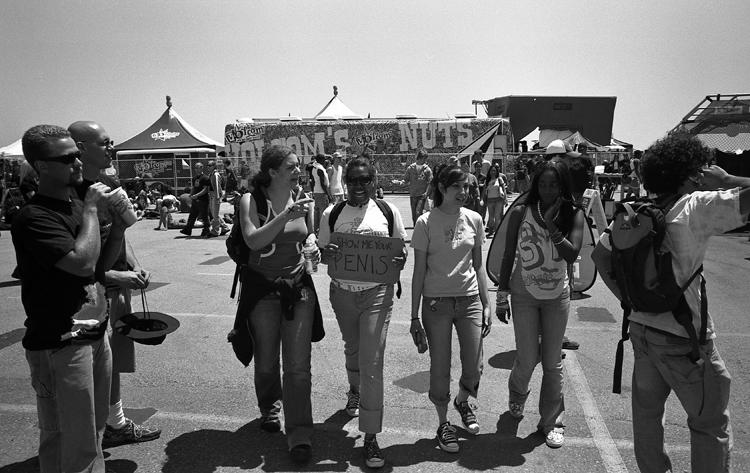
It seems like an incredibly fine line, and working around it seems to be more a required technique for street photographers. Many wonderful photographs have been made while giving precious little thought to keying into instincts (see landscape and still photography). A lot of us are content with reserving some time for photography and going out and shooting what we want, when we want, and how we want. I've been looking at the work of some really great photographers lately, and I've been wondering how these photographers can continually, consistently come up with such great images. All of their images are so original, unique, spontaneous and fresh, despite being decades old. I imagined that they had to have to been "on" all the time, and so in tune to their surroundings, instinctual. They must be (or must have been) able to key into those unique things that caught their eye. They must have been able to straddle the line between spectator and photographer.
I’m reminded of the film, Pecker. About three-quarters of the way through the film, Pecker is in the gay bar where his sister works. He witnesses her get sacked, because of events stemming from Pecker’s new found fame. His sister is in tears sobbing and yelling behind the bar about being fired, while all the patrons look on (spectators). In the silence of her soliloquy, the flash from a picture taken by Pecker suddenly hits her. We cut to Pecker with a sheepishly apologetic face. Way to go Pecker!
Wednesday, July 13, 2005
I’ve found the Anti-Ansel Adams
I received the Lee Friedlander monograph of the NY MOMA show today. I got it from Photo-Eye (photoeye.com). It was expensive, but after a quick perusal squeezed between the hand-off from the UPS guy, and bolting out the door for an evening meeting, I can say it was worth the price.
Hardcover, large, heavy, and packed full of both text and full-page plates, Lee Friedlander (as it is called) is a retrospective of an artist that I was fairly unfamiliar with. I certainly knew of him, could place him in his time (still going), seen some of his most popular street images, heard about his Stems project, jazz portraits, and self-portraits, but had actually seen very little of his work. I can say that no more.
I highly recommend the book, to both Friedlander fans and the uninitiated. Friedlander’s vision is unique and identifiable, and I wish I had become familiar with him earlier. In my early photography days (late 70’s), Weston and Ansel Adams, in particular, were (and probably still are) considered the gods of photography. I was very much into Diane Arbus, and I tended toward a different aesthetic. While my fellow photo students were trying to copy Ansel Adams using their 35mm SLR’s, I was shooting with a TLR trying to do what was probably better done with a SLR.
Naturally, I would get into “discussions” with my friends and fellow students concerning aesthetics, wherein the images I liked were denigrated as glorified snapshots, and the images they liked I, in turn, denigrated as boring, uninteresting and detached. I remember proclaiming pompously to friend that I would love to see Adams point his camera away from the heavens and heavenly settings and photograph something like a weed growing out of a crack in the sidewalk. I guess, looking back now, I saw Adams as a modern day Icarus, with his head in the clouds, ignoring reality. I absolutely hated this idea of photographers like Adams and Weston, tucked away like hermits in their compounds shooting pictures of peppers and their naked girlfriends in the sand.
My sentiment at the time was that somebody needed to turn the table on these guys. Somebody needed to march up to Yosemite and shoot the anti-Adams version of the park, or not shoot yet another calla lily in full bloom, but its cut, submerged stem, immersed in a glass vase full of water. Where was the anti-Adams, the evil Weston? Well, he was quietly, yet prolifically, out working away shooting on the streets, on projects in the workplace, city centers, and parks all around the country. He pointed the camera at himself a lot, but unpretentiously and ungloriously. Yes he shot portraits and nude pictures of his wife, but they owed more to Arbus and Walker, than they did to Weston. He shot the occasional blooming flower, but he shot more, a whole series, a book, on their stems. And his occasional Adams-like scenic is far and away overwhelmed by the sheer volume of his wonderful scenics, where the “view” is blocked by the wild natural overgrowth of the un-pruned lesser flora, and a his "poorly chosen" positioning; but, more importantly, he shot Yosemite and other breath-takingly heavenly locations in the exact same fashion, frustratingly blocking the view that the average Adams-devotees, would trek the world on their hard-earned two-week vacation to capture.
Friedlander has become a new favorite on mine, based on the fact that he is the anti-Adams, the evil Weston. He is a wonderful mix of modern photography, all those photographers we have come to enjoy and admire, Walker, Arbus, Winogrand, and yes, even Adams and Walker.
Hardcover, large, heavy, and packed full of both text and full-page plates, Lee Friedlander (as it is called) is a retrospective of an artist that I was fairly unfamiliar with. I certainly knew of him, could place him in his time (still going), seen some of his most popular street images, heard about his Stems project, jazz portraits, and self-portraits, but had actually seen very little of his work. I can say that no more.
I highly recommend the book, to both Friedlander fans and the uninitiated. Friedlander’s vision is unique and identifiable, and I wish I had become familiar with him earlier. In my early photography days (late 70’s), Weston and Ansel Adams, in particular, were (and probably still are) considered the gods of photography. I was very much into Diane Arbus, and I tended toward a different aesthetic. While my fellow photo students were trying to copy Ansel Adams using their 35mm SLR’s, I was shooting with a TLR trying to do what was probably better done with a SLR.
Naturally, I would get into “discussions” with my friends and fellow students concerning aesthetics, wherein the images I liked were denigrated as glorified snapshots, and the images they liked I, in turn, denigrated as boring, uninteresting and detached. I remember proclaiming pompously to friend that I would love to see Adams point his camera away from the heavens and heavenly settings and photograph something like a weed growing out of a crack in the sidewalk. I guess, looking back now, I saw Adams as a modern day Icarus, with his head in the clouds, ignoring reality. I absolutely hated this idea of photographers like Adams and Weston, tucked away like hermits in their compounds shooting pictures of peppers and their naked girlfriends in the sand.
My sentiment at the time was that somebody needed to turn the table on these guys. Somebody needed to march up to Yosemite and shoot the anti-Adams version of the park, or not shoot yet another calla lily in full bloom, but its cut, submerged stem, immersed in a glass vase full of water. Where was the anti-Adams, the evil Weston? Well, he was quietly, yet prolifically, out working away shooting on the streets, on projects in the workplace, city centers, and parks all around the country. He pointed the camera at himself a lot, but unpretentiously and ungloriously. Yes he shot portraits and nude pictures of his wife, but they owed more to Arbus and Walker, than they did to Weston. He shot the occasional blooming flower, but he shot more, a whole series, a book, on their stems. And his occasional Adams-like scenic is far and away overwhelmed by the sheer volume of his wonderful scenics, where the “view” is blocked by the wild natural overgrowth of the un-pruned lesser flora, and a his "poorly chosen" positioning; but, more importantly, he shot Yosemite and other breath-takingly heavenly locations in the exact same fashion, frustratingly blocking the view that the average Adams-devotees, would trek the world on their hard-earned two-week vacation to capture.
Friedlander has become a new favorite on mine, based on the fact that he is the anti-Adams, the evil Weston. He is a wonderful mix of modern photography, all those photographers we have come to enjoy and admire, Walker, Arbus, Winogrand, and yes, even Adams and Walker.
Saturday, July 09, 2005
The Found Image
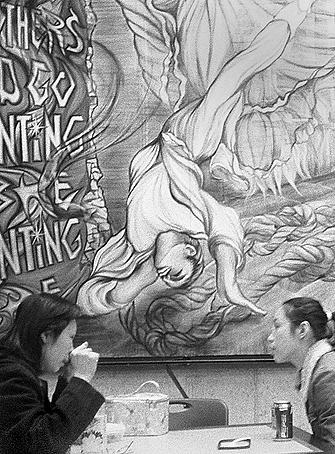 —click on the image to see it larger—
To crop or not to crop, is that really the question? I'm not sure where or when the inclination or the "rule" to always print full frame came from. Back when I was getting a degree in Photography (late 70's) it was chic to file out your negative carriers to enable you to print the black edges around the image (the frame). It was cool, and more importantly it showed that you didn't crop your image, which showed your vision and that you were a good photographer. I always found it a litte pretentious.
I was shooting with a TLR back then, so I didn't care. I had to deal the dreaded square format, for crying out loud. That said, I supposed I am predisposed not to crop when possible, or at the very least to maintain the aspect ratio of the format. I shoot 35mm now, and it is important for me to maintain that ratio, I like it and find it dynamic. But I'll crop an image and have no problem doing so, so long as the ratio is maintained. I've even cheated on that too, but rarely.
Often a good image is just an adjustment away, and shooting on the street with 35mm and 28mm lenses you're bound to get more than you intended. Those are tough angles to shoot with. You have to be right up in someone's face to really "include" them in the frame. Shooting quickly your inclination is to get the shot, first and foremost. BTW, one of the greatest things about shooting with a 28mm lens is being able to look like you're not including someone in your field of vision, when in fact you are. Once in the 40 or 50mm range and above, for get about it. You point your camera to include someone in your picture, they're gonna know it.
Serendipity, synchronicity, and signs, I've never put much weight in them until I began photographing again. Things happen to us everyday. Signs and patterns repeat all around us and with a camera you can catch them and they can speak to you, tell you things, show you things, reveal themselves. It is uncanny how an image can create itself.
The image I've included today (see above) was buried in a frame. I shot this with a cranky little Olympus XA. I parked myself in front of this mural for several weeks straight. I don't know why. I'd take my lunch at this spot just to sit in front of this mural and click pictures of people passing in front of it. I was trying for something similar to an earlier image I had made, wherein a woman passed in front of the mural, and I made the exposure. In the final result, because of the slow shutter speed, she seemed to flow into and out of the mural (courtesy of the shutter speed blur). I thought it was cool (see below).

On my last shoot of the mural, I could feel myself losing interest. I had been shooting at it; I was randomly clicking away between bites of broccoli beef and chow mein. I remember there was this guy sitting in front and off to the right side that must have seen me clicking away, because he got pissed-off and stood up and grumpily changed seats to one behind me. I thought it was a little funny. He had a mouth full of food and acted like he was just trying to eat, perform this basic necessity, and had to put up with me. I didn't care. I clicked the final shots and left. I didn't shoot anymore. I had lost interest. I processed the film later that week. It was TriX and I used D76. I was disappointed with the general compositions that resulted, until I started cropping and saw the image above. I just loved it. It was pure serendipity and a beautiful arrangement. The image is a major crop, full of the subsequent resulting grain, but so cool in how it came out. I've since called it "Conversation Muse."
I didn't make this image. It made itself. I just pressed the shutter, and found the message, the sign. I'm not unfamiliar with this process of being a facilitator, or an enabler of an image or creation.
I majored in film, and one of my most amazing experiences is being the "creator," or "director" of a film. You plan it, write it, storyboard it, and in the end, you have no control over it at all. Something happens to it. It becomes its own being, and you are just along for the ride, enabling it. In the end it's your film, but not your film. It's beautiful. That was when I realized that it wasn't the end result, but the process of creation that is important, rewarding, and fulfilling. I wish I had had the money, and the wherewithal back then to make more films, but life got in the way. That's cool too, though.
Subscribe to:
Posts (Atom)